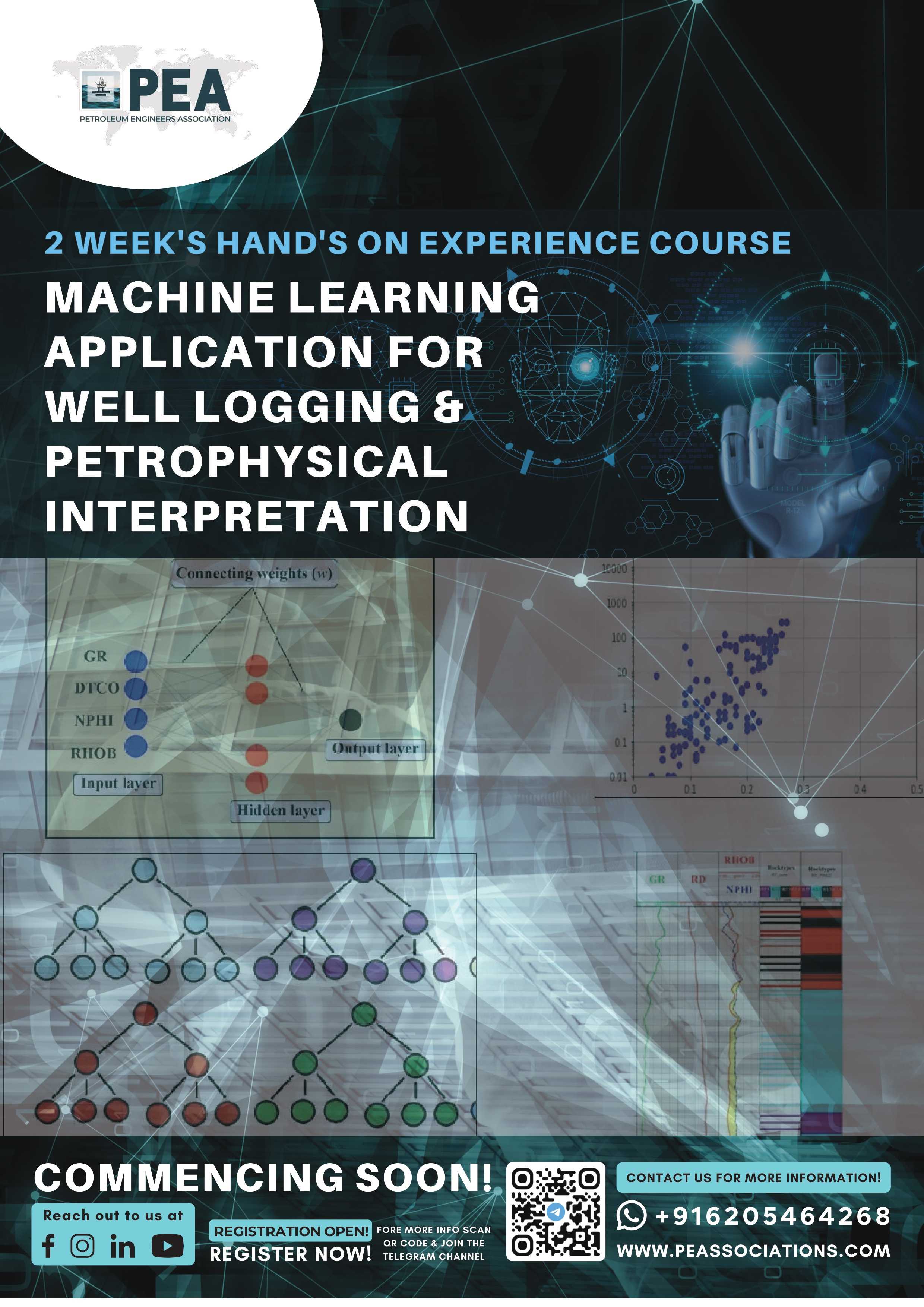

Data Science and Machine Learning Applications in Oil & Gas
Boost your team's skills and your budget! Enjoy group discounts for collaborative learning. Send an inquiry to info@peassociations.com.
Data Science and Machine Learning Applications in Oil & Gas
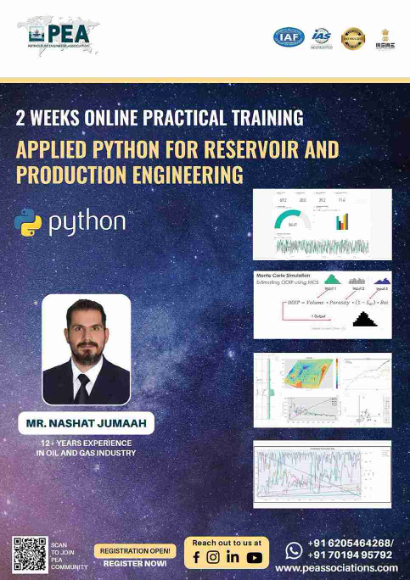
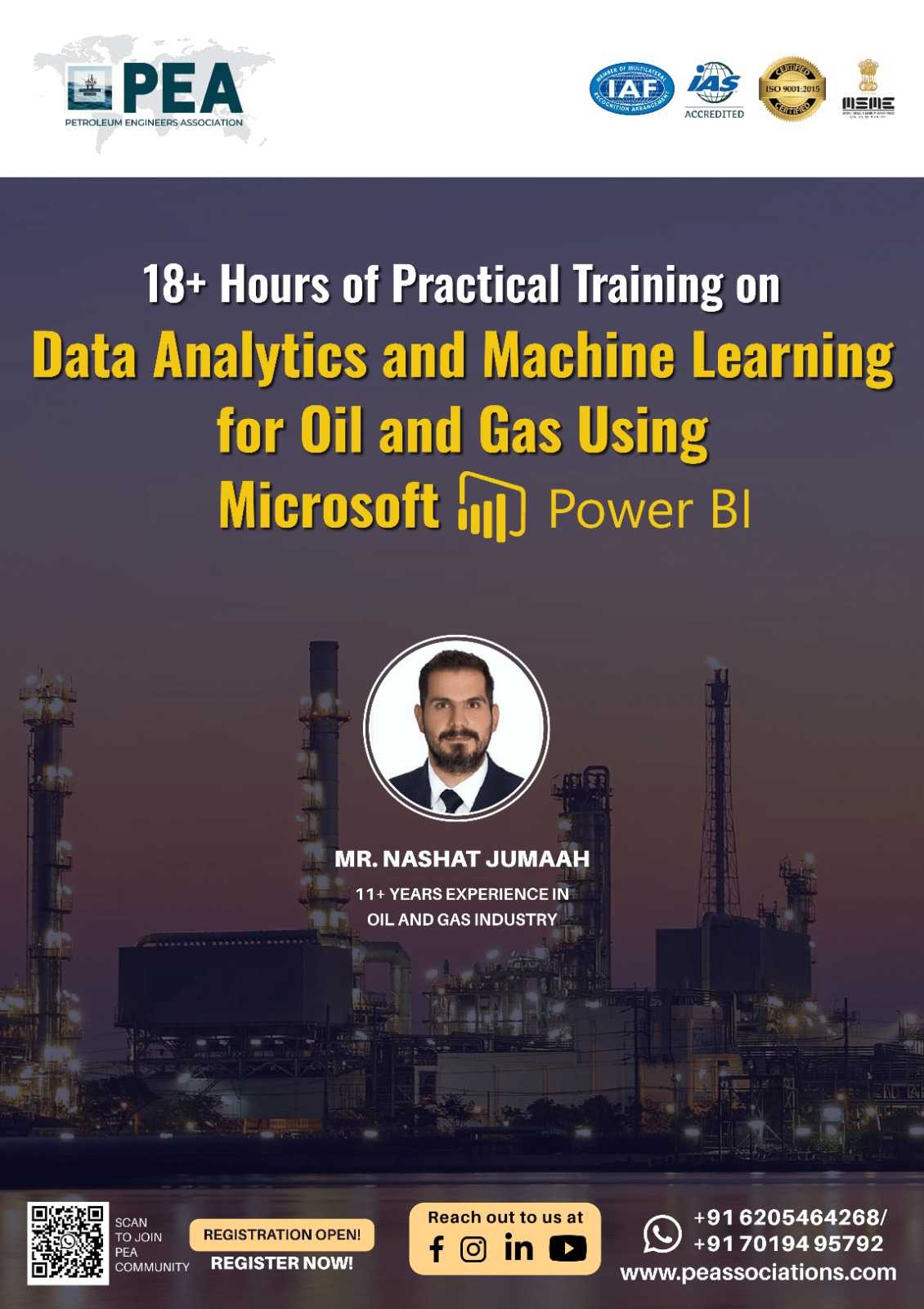
A flexible, instructor-led e-learning program designed to equip oil and gas professionals with essential skills in data science, Python programming, and machine learning applications. Learn how digital tools can drive smarter decisions, predictive analytics, and automation across the energy value chain.
Description
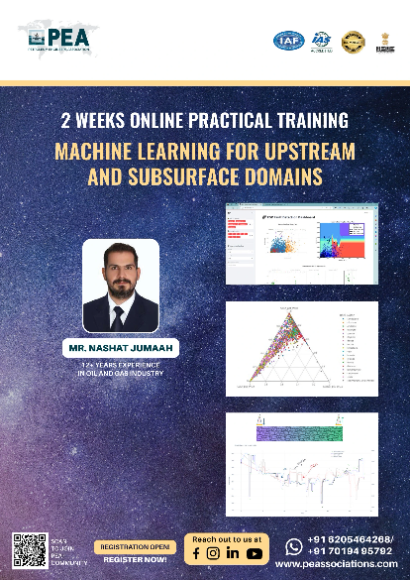
This training course introduces participants to the fundamentals of data science and machine learning applied specifically to upstream oil and gas operations. Through interactive lessons, real case studies, and coding exercises, learners gain hands-on experience in solving complex reservoir, production, and geological problems using Python and analytical techniques. Delivered in self-paced video modules, the course bridges engineering expertise with modern digital technologies for the energy industry.
Gain awareness and knowledge of the role of data science in the career path of an oil and gas professional.
Understand the mathematical principles behind machine learning algorithms and how they solve industry problems.
Learn the application of machine learning to real industrial datasets.
Acquire insights into emerging job opportunities for digitally skilled oil and gas professionals.
The course is suited for technical professionals, graduates, and students interested in the applications of data science and machine learning within oil and gas technology.
Prerequisites: None
Python Module:
This module will cover all Python basics to get started and feel confident in writing code and maintaining future code bases.
Module 1:
- Introduction to Python for the Oil and Gas Industry
- Python Tools and Package Options
- Data Types and Basic Python Functions
- Introduction to Data Casting
- Introduction to String and String Manipulation
Module 2:
- Data Containers (Lists and Dictionaries)
- Operations on Containers
- Introduction to Loops
- Introduction to Branching (IF Statements)
- Mixing Loops and Branching
- Introduction to User Functions
Module 3:
- Working with Arrays and Applying Mathematics to Them
- Working with Tabulated Data
- Basic Pandas Functions for Data Manipulation
- Introduction to Visualization
- EDA – Exploratory Data Analysis
Machine Learning Module
This module will introduce the trainee to machine learning concepts and various uses and implementations. In this module, users will learn how to utilize Python as a tool for various ML-related projects.
Module 4:
- Processing Tabulated Data
- Data Filtering, Cleansing, and Outlier Handling
- Imputations and Its Methodologies
- Feature Engineering
- Plotting for ML (Distribution, Pair Plots, Box, LMPlots, Heat)
- Machine Learning Workflows (Putting Everything in Place)
Module 5:
- Introduction to Machine Learning Types
- Introduction to Unsupervised Learning
- K-Means Clustering using Sklearn
- Clustering Oil Wells Based on Petrophysical Properties
- Clustering Gas Wells Based on Liquid Loading Index
- Hierarchical Clustering and Dendrogram
- Hierarchical Cluster-Based Water Cut in Oil Wells
Module 6:
- Introduction to Regression
- Basics of Regressions using NumPy Poly1d
- Introduction to Linear Regression in SKlearn
- Multivariate Regression in ML
- Regression Applied to Oil and Gas Production Prediction
- Evaluation of Regression Models
- Regression Sensitivity Analysis using OVAT
- Predicting Drilling Performance Using Multilinear Regression
Module 7:
- Introduction to Classification Problems
- Classifications as Applied to Oil and Gas Industry Problems
- Introduction to Logistic Regression
- Introduction to KNN
- Classifying Flow Stability in Oil Wells
- Comparing Decline Curve Analysis to ML Regression
- Introduction to Support Vectors (SVM)
- Predicting Geomechanical Properties using SVM
- Shale Formation Simulation Classification
Module 8:
- Introduction to Neural Networks
- Introduction to Deep Learning
- Introduction to Fuzzy Logic
- Applications of NN in the Oil and Gas Industry
- Model Optimization
- Dashboarding and ML Implementation
- Notes on OOP Approach and Production Grade Code
On successful completion of this training course, PEA Certificate will be awarded to the delegates
This course has been meticulously developed by a seasoned PEA expert renowned in the oil and gas industry. With extensive hands-on experience and a proven track record in delivering innovative solutions, our trainer brings a wealth of technical expertise, deep industry insight, and a commitment to excellence. Learners can trust that they are gaining knowledge from a leading authority whose dedication to professional development ensures you receive only the highest-quality training to elevate your skills and career prospects.

Frequently Asked Questions
All course bookings made through PEA are strictly non-refundable. By registering for a course, you acknowledge and accept that all fees are payable in full and are not subject to refund under any circumstances, including changes in personal or professional commitments or partial attendance.
PEA reserves the right to make reasonable adjustments to course content, trainers, or schedules where necessary, without entitling delegates to a refund. Comprehensive details of each course — including objectives, target audience, and content — are clearly outlined before enrolment, and it is the responsibility of the delegate to ensure the course's suitability prior to booking.
For any inquiries related to cancellations or bookings, please contact our support team, who will be happy to assist you.